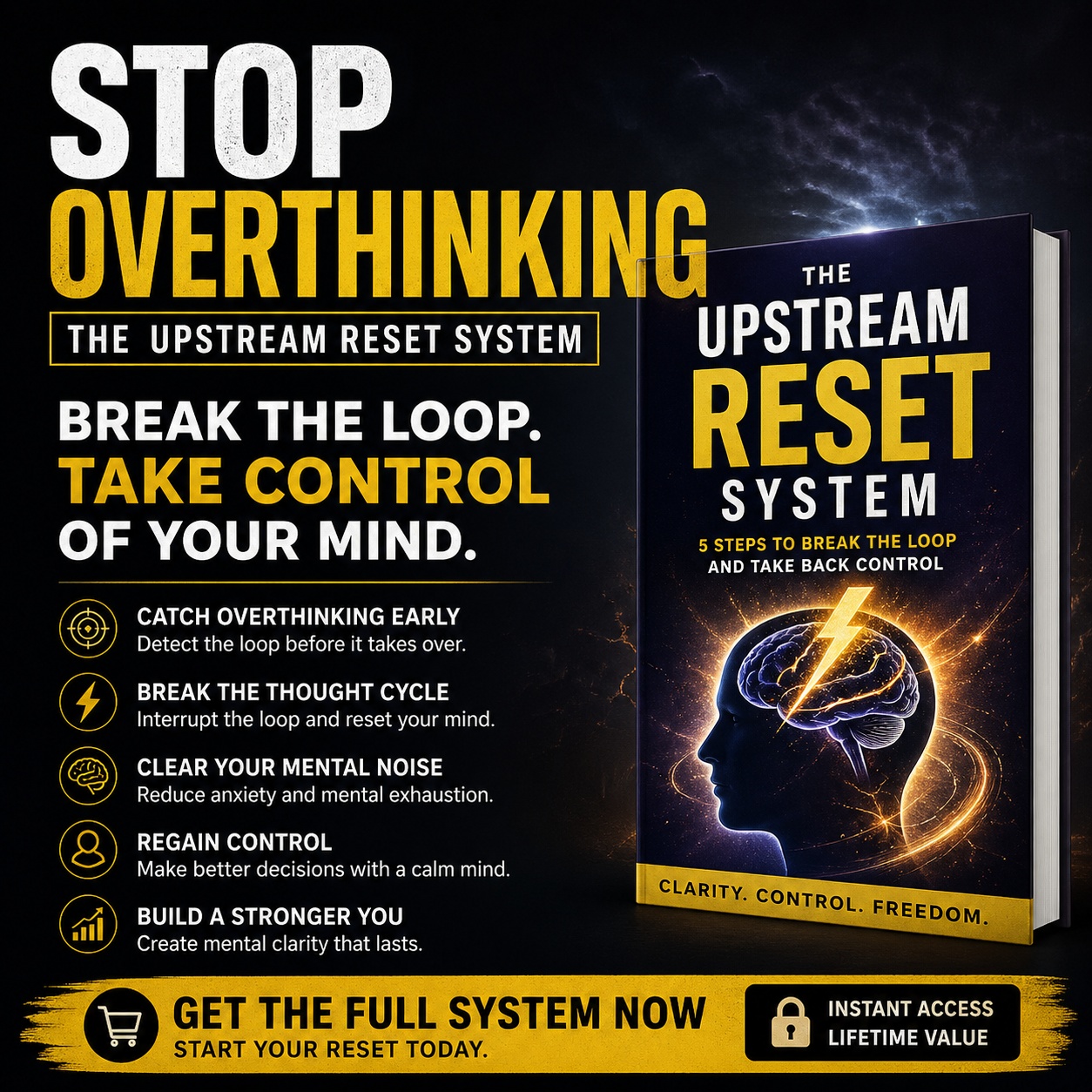
Overthinking can feel like being trapped in a room where every thought creates three more doors. The harder you search for certainty, the more possibilities appear. If you've ever replayed conversations, worried about future events, or found yourself unable to switch your mind off at night, you're not alone.
Overthinking happens when your mind becomes stuck analyzing problems, possibilities, conversations, or decisions long after useful thinking has ended. Instead of producing clarity, it creates mental noise.
Many people believe overthinking helps them stay prepared. In reality, excessive thinking often increases stress, anxiety, indecision, and mental exhaustion.
The brain is designed to identify threats and solve problems. When uncertainty appears, the mind tries to reduce it by gathering more information and running more scenarios.
Unfortunately, some problems have no immediate answer. The brain keeps searching anyway, creating a loop:
This cycle can continue for hours, days, or even years.
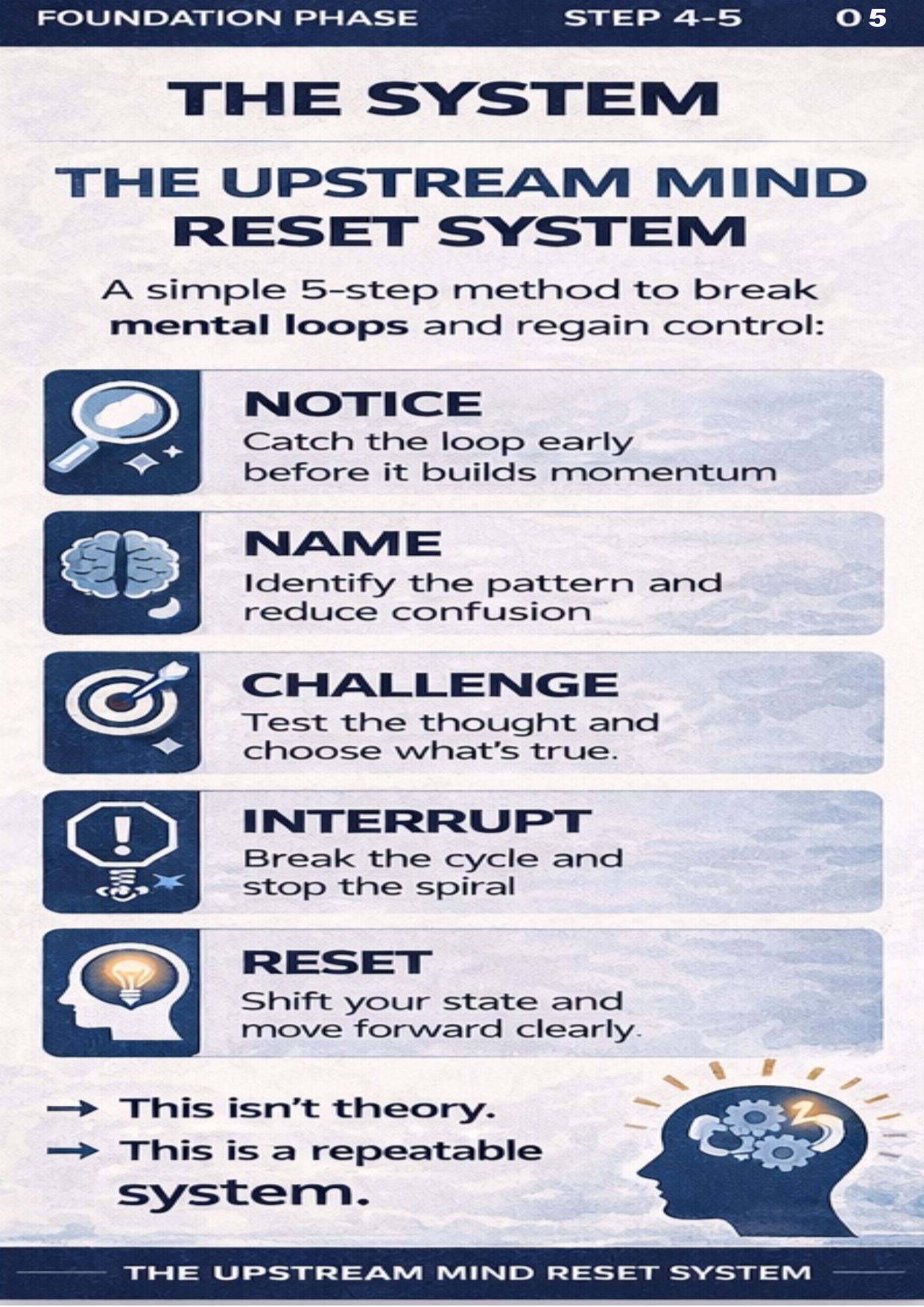
Recognize when thinking becomes repetitive rather than productive.
Identify the pattern. Is it worry, self-criticism, catastrophizing, or rumination?
Ask whether the thought is factual, helpful, or simply familiar.
Break the cycle through action, movement, breathing, journaling, or shifting attention.
Replace endless analysis with a constructive next step.
Night-time overthinking is particularly common because distractions disappear and the brain turns inward. Creating a consistent wind-down routine, reducing stimulation, and using structured reflection techniques can help reduce mental noise before sleep.
Overthinking is when the mind repeatedly analyzes situations, conversations, or future outcomes beyond the point of usefulness, often creating stress instead of clarity.
Overthinking becomes a loop when the brain treats uncertainty as a problem to constantly solve. The more you try to find certainty, the more the cycle continues.
They are closely linked but not identical. Anxiety often fuels overthinking, and overthinking can increase anxiety by keeping the mind stuck in worry patterns.
Night-time overthinking happens when distractions disappear. A consistent wind-down routine and structured thought interruption techniques can help reduce mental loops before sleep.
Some reflection is useful, but overthinking stops being helpful when it no longer leads to decisions or action and instead repeats the same thoughts in circles.
The fastest way is interruption. This can be physical movement, changing environment, writing thoughts down, or redirecting attention to a clear next action.
If you're ready for a structured approach to breaking mental loops, the Overthinking Reset Guide expands on these principles with practical exercises and techniques designed to help you regain control of your thinking.
Read MoreExplore the complete framework and deeper insights into overthinking, anxiety, mental fatigue, and practical recovery strategies.
Get the full system here